By: Denise Gilmartin, VP, Business Affairs, AICP
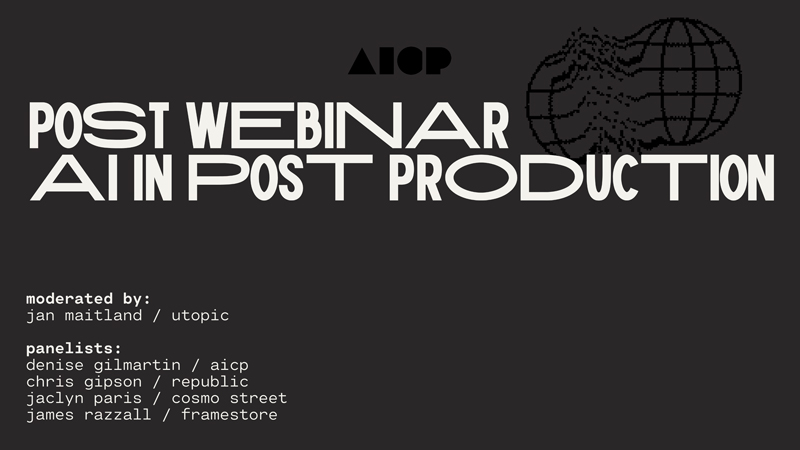
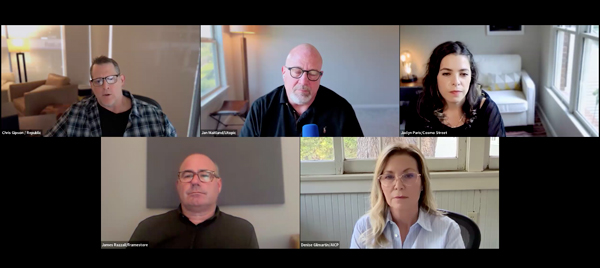
AICP’s webinar, “AI in Post-Production,” held on August 11, 2026, brought together Chris Gipson of Republic, Jaclyn Paris of Cosmo Street, James Razzall of Framestore and myself for a discussion moderated by Jan Maitland of Utopic. The panel explored the opportunities AI is creating in post-production, as well as the practical business challenges that come with incorporating these tools into creative workflows.
From a Business Affairs perspective, three issues are particularly important: copyright, indemnification and insurance.
Copyright: Infringement and Ownership
Copyright is one of the most discussed legal risks surrounding generative AI, but there are several issues to consider.
AI platforms have already faced lawsuits alleging that copyrighted images, text and other materials were used to train their models without permission. For production and post-production companies, this raises a potential concern about exposure for end users of those platforms.
One way to mitigate that risk is to use platforms that offer enterprise or commercial agreements with appropriate protections, including indemnification, and to determine whether those protections can be passed through to clients. Remember to read the actual terms of use and enterprise agreement, not just the FAQ.
Prompts and inputs also create potential exposure. Companies should maintain records of the prompts and inputs used to create AI-generated project materials. A prompt asking a tool to “make it look like an Andy Warhol print” or to create music that “sounds like the Rolling Stones” presents a different risk from one that does not intentionally reference an identifiable artist or existing work. Similar concerns arise when AI-generated material resembles a real person or imitates a real person’s voice, which could trigger a right of privacy or publicity claim.
Prompt records can help establish what the AI tool was—and was not—instructed to do. At the same time, prompts may be part of a company’s proprietary process or “secret sauce” and should generally be treated as intermediate materials rather than routine client deliverables.
Client intellectual property requires similar care. Scripts, storyboards, prior campaigns and other client materials should not be uploaded to an AI platform without permission. If client IP needs to be used, obtain approval in writing and confirm that the applicable platform agreement adequately protects the material and does not permit the material to be used for training.
Ownership presents another issue. Human-created work can be copyrighted, as can the human-created portions of a project that incorporates AI. Purely AI-generated material, however, is not eligible for copyright protection. A work created using AI may qualify for copyright protection where there is sufficient human authorship, but there is no defined amount of human input that automatically makes an AI-assisted work copyrightable. The Copyright Office evaluates this on a case-by-case basis, looking at the nature and extent of the human contribution to the expressive elements of the work.
Production agreements typically contain representations and warranties that all deliverables are works made for hire and therefore the client owns the copyright. Production agreements involving AI should be amended to include language acknowledging that AI-generated materials may not be eligible for copyright or intellectual property protection and therefore, representations and warranties regarding copyright and intellectual property ownership should exclude AI-generated content.
Indemnification: Follow the Risk
Although AI presents new risks, the basic approach to indemnification remains familiar: each party should be responsible for the materials, instructions and decisions it controls.
A production or post-production company should stand behind its own conduct, including avoiding prompts intentionally designed to create infringing output. It should also confirm that the AI tools it uses permit commercial use of the output and do not claim ownership of the project.
The agency or advertiser, in turn, should stand behind the materials and instructions it provides. If an agency asks for a digital replica of a person or a person’s voice, for example, it should represent that it has obtained the necessary permissions and indemnify the production or post-production company for claims arising from that authorized use.
The same principle applies when the client supplies intellectual property, directs that particular materials be used, or gives permission for a specific use.
Put simply: you indemnify me for your stuff, and I’ll indemnify you for mine.
E&O Insurance: An Important Backstop
Errors and Omissions insurance should remain a baseline component of an AI risk-management strategy, although AI-related coverage is still largely untested.
To date, much of the prominent copyright litigation has focused on AI platforms and the materials used to train their models rather than claims against production or post-production companies arising from AI-generated deliverables. As a result, it is still unclear how insurers will respond if end-user claims become more common.
In theory, if a finished product unintentionally infringes copyrighted material, E&O insurance should respond regardless of whether the image or other material was generated by a human or through AI.
The Bottom Line
Understand the terms of the AI platforms you use. Protect client IP and confidential information. Maintain records of prompts, inputs and approvals. Do not promise copyright protection that may not exist. Allocate contractual risk. And maintain appropriate E&O insurance as a backstop.
The technology will continue to evolve, but good business affairs practices remain consistent: know what you’re signing, get permission when you need it, put important approvals in writing, do not promise things you cannot provide, and allocate risk appropriately.
If you would like to view the webinar, please click here. (Note: You will need your member company ID to access this Members-Only content. If you do not know your company ID #, please contact Gabriela Romero at gabrielar@aicp.com.)
If you have any questions regarding this article or any other business affairs issue, please contact me at deniseg@aicp.com.
This information is designed as a service to AICP Members and is intended only to provide general information on the subject covered and not as a comprehensive or exhaustive treatment of that subject, legal advice, or a legal opinion. Members are advised to consult with legal counsel and other professionals with respect to the application of the subject covered to any specific production or other factual situation.