California's proposed Commercial Production Tax Credit Program continues to gain momentum in the Legislature.
Assembly Bill 2403 (Assemblymember Sade Elhawary), which would establish California's first tax credit specifically for commercial production, has now cleared two Senate policy committees with unanimous bipartisan support.
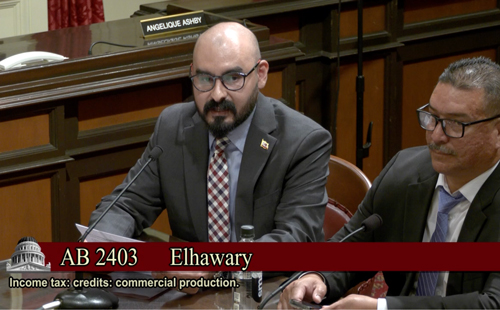
The bill first passed the Senate Revenue and Taxation Committee on June 24 before advancing to the Senate Public Safety Committee on June 30. Acting Committee Chair, Senator Timothy Grayson said of the bill, “Commercial production is an important part of California's broader film and media economy. And so what this bill makes California – it makes it more competitive for commercial production by providing an incentive to keep productions right here in California.”
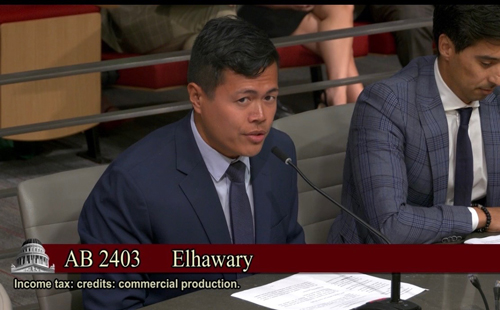
The Public Safety referral was required because the bill includes a certification requirement under penalty of perjury for applicants seeking the tax credit. Following review, the committee approved the measure and advanced it to the next stage of the legislative process.
AICP staff testified in support of AB 2403 at both Senate hearings, emphasizing the significant decline in commercial production occurring in California, the growing competition from other states and countries offering production incentives, and the importance of restoring California's competitiveness while protecting high-quality industry jobs. Additional testimony was provided by Rudy Reyes, an alumnus of ManifestWorks and current member of IATSE Local 728.
AB 2403 would establish a $15-million per year tax credit of 20 percent for qualified expenditures in the Los Angeles studio zone, or 30 percent for qualified expenditures outside of L.A.
Having cleared its Senate policy committee referrals, AB 2403 now moves to the Senate Appropriations Committee, where legislators will evaluate the bill's fiscal impact. If approved by Appropriations, the measure will proceed to the Senate Floor for consideration by the full Senate.
Should the Senate approve the bill, it will go back to the Assembly for concurrence to amendments that were adopted in the Senate process before it can be presented to the Governor for signature.